What Is Vector Addition Rule
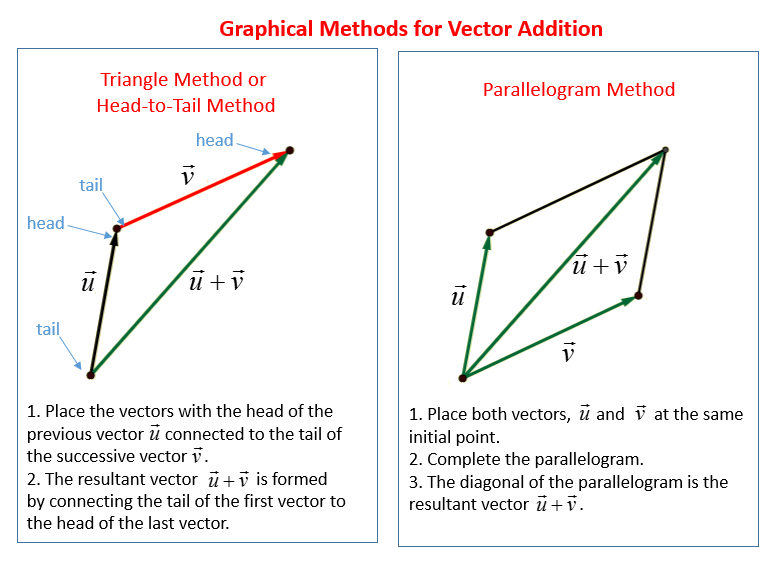
Triangle Law of Vector Addition Statement of Triangle Law If 2 vectors acting simultaneously on a body are represented both in magnitude and direction by 2 sides of a triangle taken in an order then the resultant both magnitude and direction of these vectors is given by 3 rd side of that triangle taken in opposite order. Vector addition is presented here because it occurs quite often in the study of propulsion and because it demonstrates some fundamental differences between vectors and scalars.
Vector Addition Video Lessons Examples And Solutions
Place both vectors u and v at the same initial point.

What is vector addition rule. Vector addition is one aspect of a larger vector algebra which we are not going to present at this web site. For two vectors the vector sum can be obtained by placing them head to tail and drawing the vector from the free tail to. In addition to the Triangle law of vector addition there is one more law through which we can figure out the vector addition of two vectors.
Head-to-Tail Method The head-to-tail method is a graphical way to add vectors described in Figure 4 below and in the steps following. Derivation of the law. The Statement of Parallelogram law of vector addition is that in case the two vectors happen to be the adjacent sides of a parallelogram then the resultant of two vectors is represented by a vector.
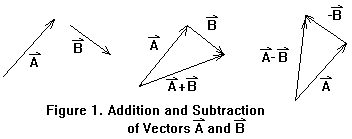
Laws of Vector Addition A vector is a physical quantity which is represented both in direction and magnitude. To obtain vecR which is the resultant of the sum of vectors vecA and vecB with the same order of magnitude and direction as shown in the figure we. It is called P.
Furthermore this vector happens to be a diagonal whose passing takes. The resultant sum vector can then be obtained by joining the first vectors tail to the head of the second vector. Vector Addition Using the Head-to-Tail Rule.
Vector Addition is Associative We also find that vector addition is associative that is u v w u v w. This can be illustrated in the following two diagrams. Vectors are usually denoted on figures by an arrow.
The magnitude of a vector is its length and is normally denoted by or A. The following rules apply in vector algebra. Notice that u v w and u v w have the same magnitude and direction and so they are equal.
Parallelogram rule In essence adding vectors means traveling along one of them and then the other. Triangle law of vector addition states that when two vectors are represented as two sides of the triangle with the order of magnitude and direction then the third side of the triangle represents the magnitude and direction of the resultant vector. Vector addition can be defined as the operation of adding two or more vectors together into a vector sum.
Addition of two vectors is accomplished by laying the vectors head to tail in sequence to create a triangle such as is shown in the figure. Applying head to tail rule to obtain the resultant of. Vector addition can be performed using the famous head-to-tail method.
It tells you where to go AND it doesnt matter where you start. The law states that the sum of vectors remains same irrespective of their order or grouping in which they are arranged. According to this rule two vectors can be added together by placing them together so that the first vectors head joins the tail of the second vector.
That means that if we draw one as an arrow then the traveling along it translates to moving as a point from its starting point to the endpoint. The tail of the vector is the starting point of the vector and the head or tip of a vector is the final pointed end of the arrow. In the upcoming discussion we shall learn about how to add different vectors.
Graphical vector addition involves drawing a scaled digram using either the parallelogram or triangle rule and then measuring the magnitudes and directions from the diagram. Vector addition finds its application in physical quantities where vectors are used to. Graphical solutions works well enough for two-dimensional problems where all the vectors live in the same plane and can be drawn on a sheet of paper but are not very useful for three-dimensional.
Triangle law of vector addition states that when two vectors are represented by two sides of a triangle in magnitude and direction taken in same order then third side of that triangle represents in magnitude and direction the resultant of the vectors. Where P and Q are vectors and a is a scalar. A vector corresponds to an instruction like step two steps east and one step north.
There are different laws of vector addition and they are. In the addition of vectors we are adding two or more vectors using the addition operation in order to obtain a new vector that is equal to the sum of the two or more vectors. The parallelogram law gives the rule for vector addition of two or more vectors.
Basic Stuff About Vectors

Vector Diagram Parallelogram Method For 4 Different Kinds Of Questions Physics Notes Physics And Mathematics Physics Concepts
Vector Addition
Adding And Subtracting Vectors

Prove That W X 1 X N Sum X I 0 Is A Subspace Of The Vector Space R N Math Videos Sum Algebra

Vector Addition Orthogonal Vectors X Y Cientificos

Calculus I The Product Rule Level 2 Product Rule Calculus Rules

Vector Cross Product Dgm Calculus Zero Point Energy Chapter

How To Prove A Set Is A Subspace Of A Vector Space Math Videos Maths Exam Algebra
Vectors And Vector Arithmetic
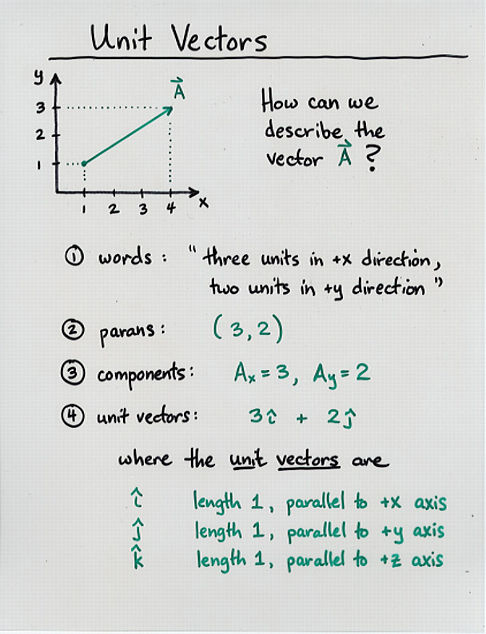

Addition Of Vectors By Means Of Components Physics Youtube
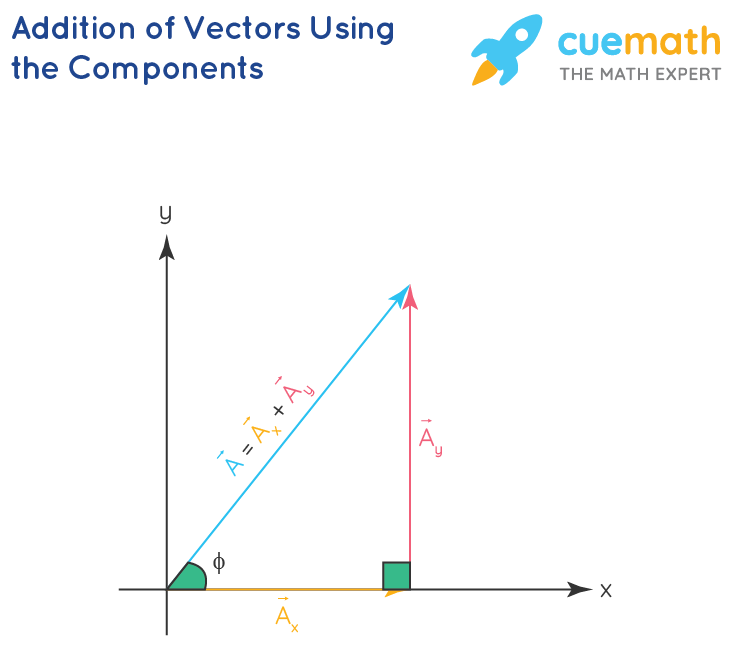
Addition Of Vectors Properties Laws Solved Examples

Vector Cross Product Dgm Calculus Zero Point Energy Chapter

Vector Addition Physics Classroom Math Foldables Mathematical Equations
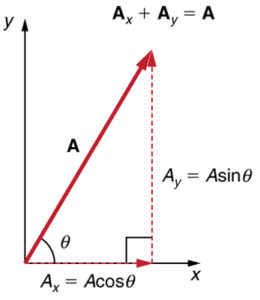
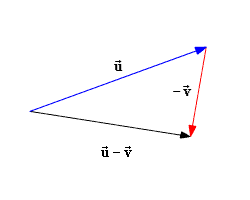
Vector Addition And Subtraction Analytical Methods Physics

Prove The Set Of All Bounded Functions Is A Subspace Of A Vector Space Math Videos Maths Exam Algebra

Formula For Area Of A Triangle Studying Math Math Blog Basic Math Skills

Vector Addition Parallelogram And Triangle Laws Videos And Examples
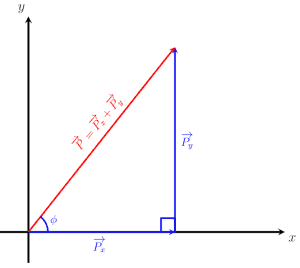
Vector Addition Explanation And Examples